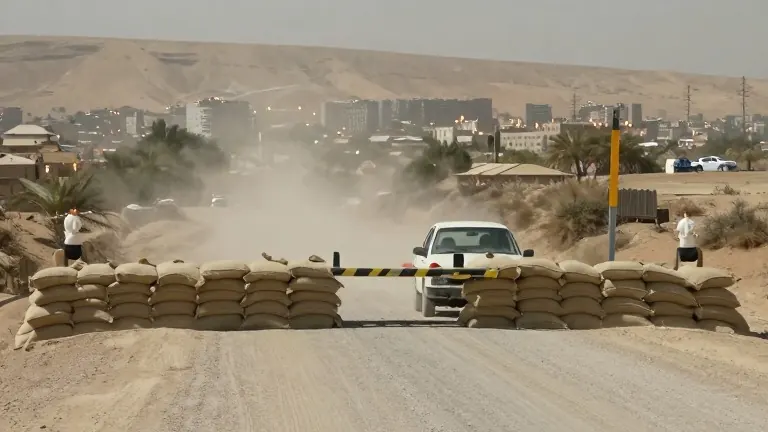
US strikes Iran ahead of US vote
Limited attacks hit Qeshm and Hengam islands as Tehran plans to train one million paramilitary volunteers.
By Samir Patterson ·
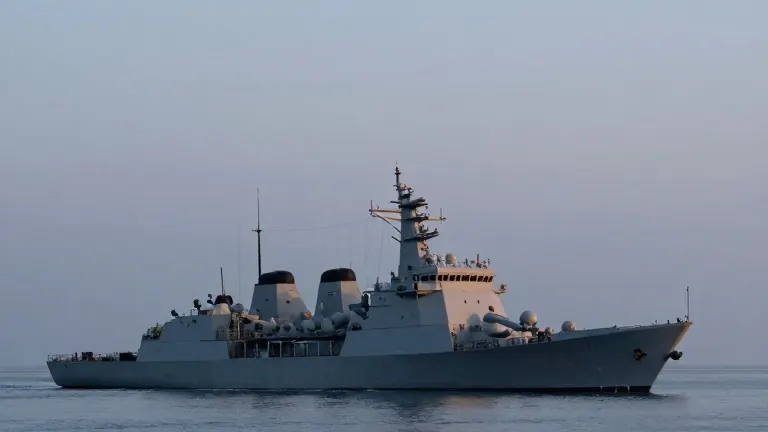
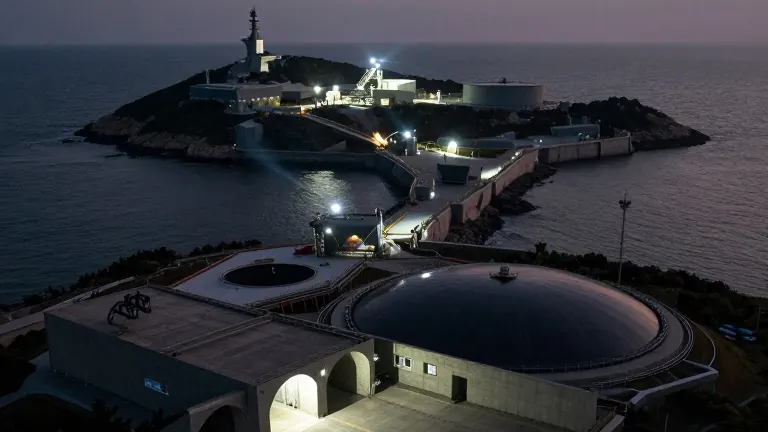
Approximately one-fifth of the global oil supply passes through the Strait of Hormuz. That critical artery has come under fire again as the United States struck several Iranian targets on Monday. The attacks occurred the day before the U.S. midterm elections. Iranian state media reported explosions on the islands of Qeshm and Hengam. Detonations were also heard in the coastal area of Bandar Abbas. This limited operation was not announced publicly before it began.
An anonymous U.S. official confirmed the strikes. The official said the targets were Iranian units that had been firing surface-to-air missiles at the United States. The attacks followed a two-day plan announced by Iran to reopen the strait. Tehran also planned to resume nuclear talks with Washington. The conflict has lasted more than eight months. It has shaken the global economy and caused damage in Iran.
Vice President JD Vance spoke to reporters on Monday about the diplomatic outlook. He and President Donald Trump feel good about the prospects for a negotiated deal, Vance said. This comment came before the official confirmation of the new strikes. Indirect negotiations have been ongoing. Israel and some Middle Eastern allies have pressured Trump on how to proceed with the war. The U.S. Navy maintains a blockade to stop Iranian oil tankers from reaching global markets. Thousands of U.S. soldiers remain in the waters off Iran. Another aircraft carrier and additional troops are en route to the region.
Prime Minister Benjamin Netanyahu pushed for another wave of attacks after the U.S. elections. Two regional officials and one other person familiar with the matter reported this pressure. Netanyahu lost his parliamentary majority in last week’s Israeli elections. A return to large-scale war could help him form an emergency government. Diplomats are trying to build a framework for a truce. Iran would stop attacks in the strait in exchange for the U.S. lifting its blockade of Iranian ports. More talks are expected this week.
Iranian authorities moved to expand their defensive capabilities on Monday. They opened a third military training center in Tehran. Officials announced plans to train one million paramilitary volunteers nationwide. The Basij, a paramilitary force linked to the Revolutionary Guard, attended the opening ceremony. Ali Kowsari, the deputy head of Basij training, said 1,500 training bases would start operating this week. These bases will work in cities and towns. Two similar centers opened in Tehran in August and September.
President Trump previously stated that the U.S. would not attack Iran before the midterm elections. The unpopular war and its impact on gasoline prices have been a weak point for the Republican Party. The party aims to keep control of Congress. The new strikes may revive concerns about large-scale operations. The region is on high alert.
Iranian citizens are closely watching the U.S. vote. Some hope for a change in U.S. policy. Reza Rezaei, 69, said the American people need to make a fundamental decision. He described U.S. leadership as extreme and said it supports Israel, a country he said is killing children. He expects the change to bring peace and stability. Raheleh Movahhed, also from Tehran, was less optimistic. She said it makes little difference who comes to power. She distinguished between the American people and U.S. policies. She stated that U.S. policies have always had a problem with Iran.
Parliament Speaker Mohammad Bagher Qalibaf addressed the diplomatic status on Tuesday. He said Iran delivered a firm and rational response to the U.S. side. He claimed the ball is now in U.S. hands to avoid war. It was not immediately clear which specific response he referred to. Qalibaf warned that Iranian armed forces are at their highest level of defensive readiness. He said that if Washington makes another strategic miscalculation, it will face a new battlefield and be more desperate than it is today.