Netanyahu and Eisenkot Face Off in Israel's Knesset Election
Voters choose parties in a tight race shaped by the 2023 Hamas attack and disputes over military conscription.
By Charlotte Dubois ·
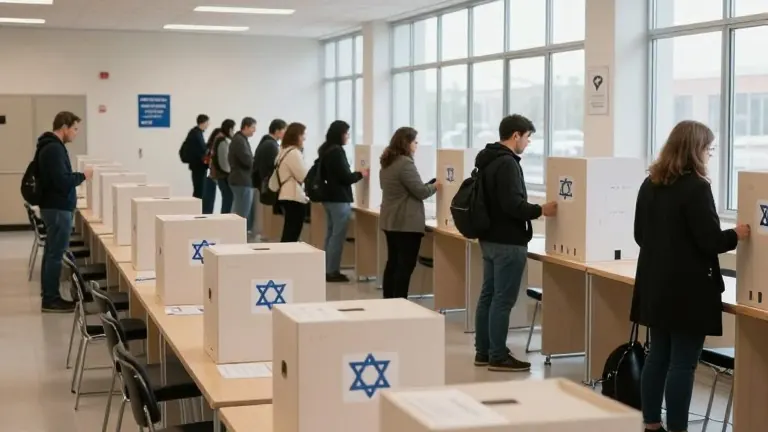
Israeli citizens cast ballots Tuesday to select the political parties that will form the next government, a process that will determine the nation's next prime minister. The vote pits incumbent Benjamin Netanyahu against former military chief of staff Gadi Eisenkot in what polling describes as a narrow contest.
The election serves as a direct referendum on Netanyahu, who has served as prime minister longer than any predecessor. While voters cast ballots for parties rather than individuals, the resulting alliances will decide which leader commands a majority in the 120-seat Knesset.
The trauma of the October 7, 2023, Hamas attack remains the central issue in the campaign. That day, militants killed 1,200 people and abducted 251 others, marking the deadliest day in Israeli history. According to the Israel Democracy Institute, 68% of Jewish Israelis state that their views on the attack and its aftermath are a primary factor in their voting decision.
A major point of contention is military service. Netanyahu's coalition has supported exemptions for ultra-Orthodox men engaged in religious studies, a policy that has drawn criticism during prolonged conflicts. Eisenkot, who lost his son and two nephews in the Gaza war, has pledged to end these de facto exemptions. About a quarter of Jewish voters identified mandatory service as a key voting criterion.
Several other leaders are vying for influence in the new coalition. Naftali Bennett, 54, runs with Yair Lapid on a centrist ticket. Itamar Ben-Gvir, 50, leads a far-right party within the current government. Yair Golan, 64, heads the center-left Democrats, which supports establishing a Palestinian state. Mansour Abbas leads Ra'am, the first Arab-led party to join a governing coalition, with his campaign focused on crime in Arab communities.
International dynamics also play a role in the domestic race. President Donald Trump endorsed Netanyahu last week, a move that has energized the prime minister's base. The United States and Israel launched a joint operation against Iran on February 28, and regional talks continue as tensions persist. An international arrest warrant hangs over Netanyahu, while rights groups and U.N. officials have accused Israel of genocide, a claim the country rejects.