Pope Leo's Itinerary: A Stop in Uruguay's Secular Heart
The Vatican has confirmed that Pope Leo XIV will celebrate Mass at the Florida shrine on Nov. 8, a date that coincides with the national feast of Uruguay's patroness.
By Samir Patterson ·
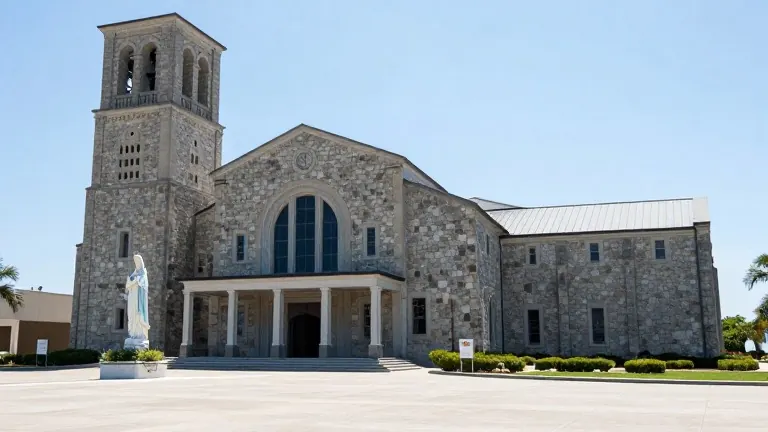
Pope Leo XIV will celebrate Mass in Florida, Uruguay, on Nov. 8, a date that aligns with the feast of the country’s patroness. The Vatican announced the trip to Uruguay, Argentina, and Peru on Aug. 5, with the journey spanning 10 cities from Nov. 6 to 17. Although Argentina was initially expected to host the pope for the first weekend of the tour, the liturgical calendar dictated the schedule for Uruguay. The Nov. 8 feast of Our Lady of the Thirty-Three falls on a Sunday this year, a day when thousands of Uruguayans traditionally make a national pilgrimage to the shrine. This timing secured the location for the pope’s Sunday Mass.
The image in Florida is a small statue carved from Paraguayan cedar, believed to originate from nearby Jesuit missions. According to the Uruguayan bishops, an Indigenous man donated land and the image for a chapel in the late 18th century. The chapel was established in 1782 and became a parish in 1805. The statue’s name derives from the Thirty-Three Orientals, revolutionaries who fought for independence from the Brazilian Empire in 1825. Father Gabriel González Melano, a priest in the Diocese of Florida, noted that the devotion is historical rather than based on a miraculous apparition. He stated, "The significance of the Virgin of the Thirty-Three is historical and patriotic."
The shrine has accumulated symbols of national identity over the past two centuries. In 1857, Manuel Oribe, a commander of the Thirty-Three and later president, donated a gold crown after surviving a shipwreck. Pope John XXIII authorized the image’s canonical coronation in 1961 and declared it the patroness of Uruguay in 1962. The government designated the cathedral and the image national historic monuments in 1975. In 1994, the site became the National Shrine of Our Lady of the Thirty-Three. Pope John Paul II celebrated Mass there in 1988, describing the stop as a "joyful and obligatory stage" of his journey.
The papal visit occurs in a country with a strong tradition of secularization. Uruguay separated church and state in 1919, a move that replaced religious names for public holidays and established a constitutional guarantee of freedom of worship. The government supports no religion, but Father González argues that this secularism has extended into society. He noted that Uruguay lacks Catholic chaplains in public hospitals, armed forces, police, and prisons. Religious education is also excluded from public schools. He described the result as an institutional treatment of religion as irrelevant, rather than persecution.
Data from Latinobarómetro’s 2024 survey shows that 52% of Uruguayans claim no religious affiliation, the highest rate among 18 surveyed Latin American countries. Only 33% identified as Catholic. Despite these numbers, over 10,000 people attended the 2019 national pilgrimage, and more than 20,000 gathered for the 2023 beatification of Bishop Jacinto Vera. Father González believes Pope Leo’s visit will generate high expectations. He stated, "People will not be indifferent. Quite the opposite."
The visit also takes place against a backdrop of rising suicide rates. The Health Ministry reported 21.35 deaths per 100,000 people in 2024, a trend that has continued upward since 2000. Among people ages 20 to 24, the rate reached a historic high of 33.2 per 100,000. The government has designated suicide prevention a public health priority. Father González suggested that a message about transcendence and hope could resonate with both religious and non-religious citizens. Pope Leo’s doctors confirmed in October that he needs no further treatment for lung cancer, and the trip will proceed as planned.