House Map: 46 Battlegrounds and the Three-Seat Margin
Democrats need a net gain of three districts to take control of the House, a task complicated by new maps and a significant Republican spending advantage.
By Charlotte Dubois ·
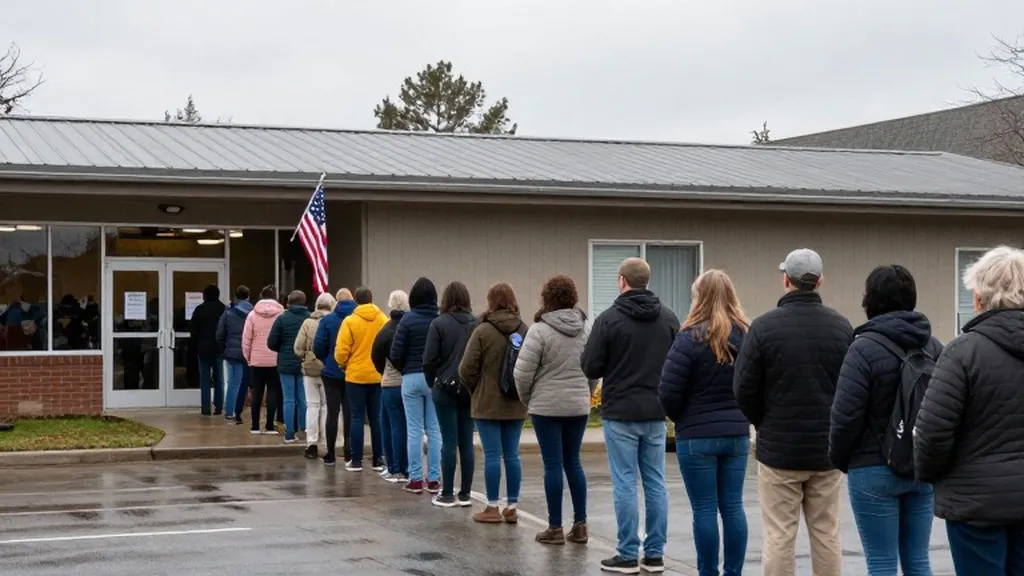
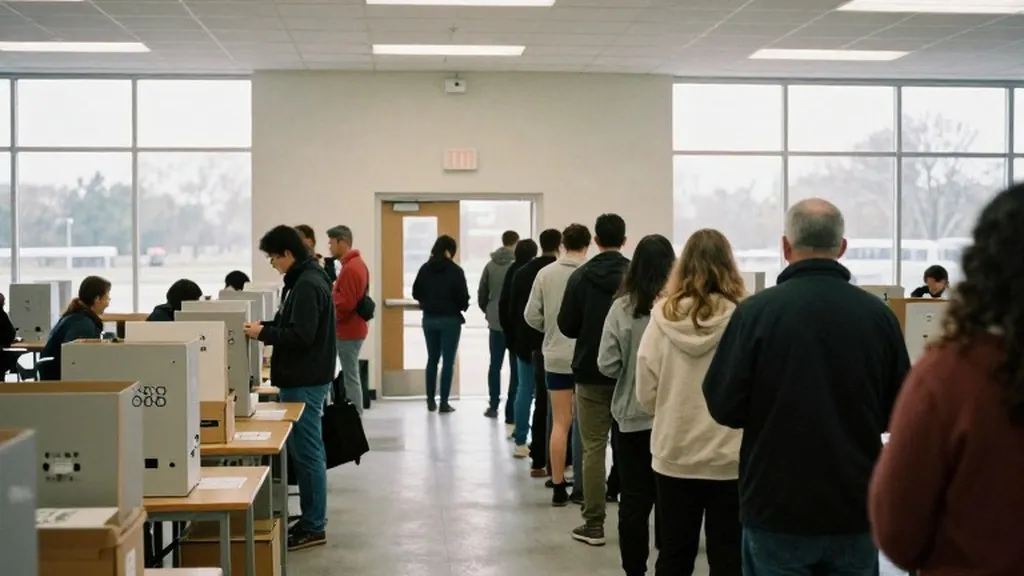
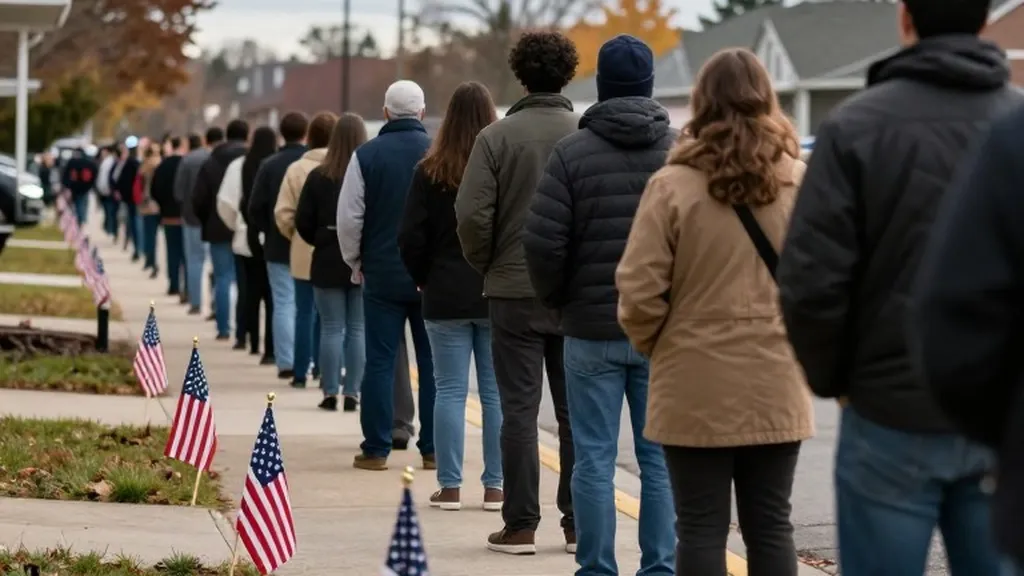
Voters across the country are heading to the polls on Tuesday, November 3, 2026, to decide the balance of power in the United States House of Representatives. All 435 seats are up for grabs in this midterm election, which serves as a critical check on President Donald Trump's second term. The outcome will determine which party holds the gavel for the final two years of the current administration. The day is a referendum on the president's performance, with many citizens citing high prices and an unpopular war with Iran as primary motivators.
The current composition of the House leaves the outcome razor-thin. Republicans currently hold 218 seats, while Democrats control 214, with one independent and several vacancies. This narrow gap means that Democrats need a net gain of three districts to secure a majority. Conversely, Republicans can afford to lose no more than two seats to retain control. There are 46 battleground districts in play. Of these, 25 are currently held by Democrats and 21 by Republicans, making every vote in these areas potentially decisive for the chamber's leadership.
The redistricting process has significantly altered the playing field for this election. Seven states are using new congressional maps following mid-decade redistricting: California, Florida, Missouri, North Carolina, Tennessee, Texas, and Ohio. These new boundaries create fresh competitive landscapes that may not align with previous partisan leanings. While Republicans hoped to use redistricting to beat the historical midterm pattern of a president's party losing seats, the new districts in states like Florida may vote differently than originally projected. This uncertainty adds a layer of complexity to the strategy for both parties as they fight for control of the legislative agenda.
The financial disparity between the two parties presents a substantial obstacle for Democrats. The 2026 elections are likely to be the most expensive in history. Republican committees have outraised and outspent their Democratic counterparts, aided significantly by Trump-affiliated groups and Elon Musk. An analysis of AdImpact data shows that 88.1 percent of Republican general election TV ad spending went to states and districts Trump won in 2024. Notably, more than $850 million was spent in areas where he won by 10 points or more. Despite this committee-level advantage, Democrats outraised their opponents at the candidate level, suggesting a different dynamic in direct voter outreach.
For Democrats, the path to a majority is fraught with challenges beyond money and maps. The party is looking to capitalize on voter frustration with the cost of living and healthcare. James Moore, a 57-year-old librarian in Raleigh, North Carolina, expressed these sentiments, noting that he is paying more taxes, more for healthcare, and more for everything. If Democrats win even one chamber, investigations and possible impeachment proceedings become likely. House Democratic Leader Hakeem Jeffries has outlined a 100-day agenda focused on the cost of living and oversight, aiming to address the concerns that have driven many voters to the polls.
The election also features a significant number of open seats due to retirements. Ballotpedia notes that 60 House incumbents did not run again, including 23 Democrats and 37 Republicans. This turnover creates opportunities for challengers to flip seats that were previously safe for the other party. Among the Democratic-held districts are 21 that voted for Trump in 2024, while nine Republican-held districts voted for Kamala Harris. These specific districts represent the most vulnerable ground for both sides, where small shifts in turnout or persuasion could alter the final count.
Election administration has been a point of contention, with legal battles affecting how votes are counted. A federal judge temporarily barred the Trump administration from carrying out a plan to prevent noncitizen voting, a move critics argued risked disenfranchising eligible voters. Additionally, a judge ordered the administration to stop demanding that California election officials segregate ballots cast by people on lists of suspected noncitizens. The U.S. Postal Service has added hours, staff, and special lines to ensure mail ballots are counted on time. These administrative measures aim to ensure that the high volume of early votes, which surpassed four years ago in many states, is processed efficiently.
The mood among Democrats is described as cautiously optimistic. DCCC Chair Rep. Suzan DelBene stated that the American people are angry and want change. However, the party faces the reality that one or two seats could tip the chamber in either direction. Republicans, meanwhile, are bracing for a potential loss of the House while fighting to hold the Senate. The Associated Press notes that the narrow margins in the House make this a high-stakes contest where every district matters. The new maps in the seven redistricted states will be closely watched to see if they provide the expected advantage to the party that drew them.
As polls open, the focus remains on the 46 battleground districts where the majority of the fight is taking place. The interplay of new maps, high spending, and voter sentiment creates a volatile environment. Democrats hope that their focus on economic issues will resonate with voters who feel the strain of high prices. Republicans are relying on their financial edge and the efforts of President Trump, who held dozens of rallies to mobilize his base. The final tally in these key districts will determine whether the House remains in Republican hands or shifts to Democratic control, setting the stage for the next two years of congressional oversight.
The election results will have broad implications beyond just the House leadership. Wall Street is watching the outcome, as Reuters notes that results could influence investor concerns about AI spending and debt ceiling negotiations. The control of the House will also affect the ability to pass legislation or block executive actions. With more than 57 million people having already voted, the early numbers suggest a high level of engagement. The final count will reveal whether the demographic and geographic shifts in the seven redistricted states have shifted the balance of power in the nation's lower chamber.