China's top leaders meet as eight key seats sit empty
A four-day session on party discipline begins with low attendance, as Xi Jinping pushes for tighter control amid economic headwinds and a major military purge.
By Giulia Marshall ·
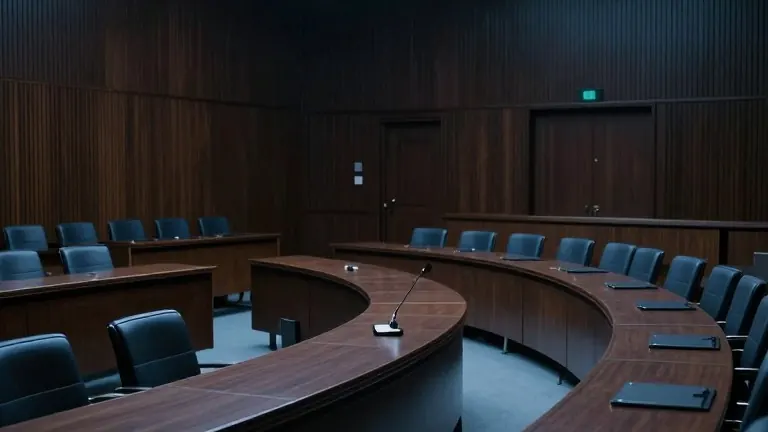
China’s political leadership has begun a four-day closed-door session to review internal party rules. The meeting, which started Monday, brings together roughly 300 Central Committee members to discuss how to enforce stricter discipline within the ruling Communist Party. This gathering occurs about a year before President Xi Jinping is expected to win a fourth five-year term.
Attendance is notably low compared to historical standards. Eight seats on the Central Committee are currently vacant, and 15 additional members are under investigation. This marks the lowest turnout for such a plenum since the death of former leader Mao Zedong in 1976. The absences reflect the impact of Xi’s 14-year anti-corruption campaign, which has removed thousands of officials from office.
The session is also focused on the military. Xi’s anti-corruption drive has removed five of the seven members from the Central Military Commission, the body that controls the armed forces. The plenum may see the appointment of new members to this commission. Analysts suggest Xi could also restructure how the party exercises control over the military during these talks.
State media reported that the committee will debate a draft policy on "full and rigorous party self-governance." The goal is to make officials more disciplined and less corrupt. In a January speech released ahead of the meeting, Xi criticized "two-faced" officials who follow orders in public but resist them internally. He accused some leaders of being "politically opportunistic" and pursuing "individualism."
Ruby Osman, a senior policy adviser at the Tony Blair Institute for Global Change, told The Associated Press that the plenum serves to align the next generation of leaders with Xi’s view of China’s risks and opportunities. Neil Thomas, a senior fellow at the Asia Society Policy Institute, expects the session to demand tighter scrutiny of public spending and more technology to detect corruption.
The political meeting takes place while the economy faces pressure. China is struggling with slow domestic spending and a long-running crisis in the property sector. Tensions with the United States also weigh on the leadership as it seeks to stabilize the world’s second-largest economy.