Supreme Court Weighs AR-15 Bans as Sandy Hook Families Seek Ruling
Relatives of victims filed briefs arguing for stricter firearm regulations ahead of oral arguments scheduled for December.
By Giulia Marshall ·
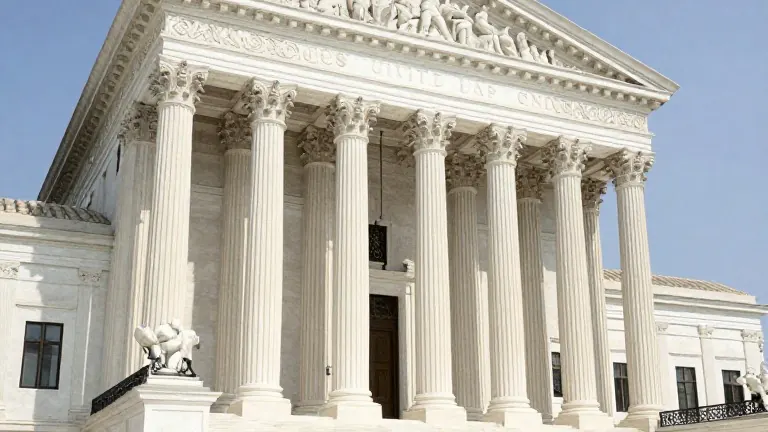
The U.S. Supreme Court will examine the constitutionality of state and local restrictions on semiautomatic rifles in December, a move that could impact the legal standing of firearm regulations in roughly a dozen states. The decision will determine whether bans on AR-15 style weapons, which are owned by millions of Americans, can survive legal challenges under the Second Amendment.
Families of victims from the 2012 Sandy Hook Elementary School shooting filed a friend of the court brief on Wednesday. They are urging the justices to uphold bans currently in place in Connecticut and the Chicago area. The filing cites the specific lethality of the weapons used in the tragedy and the physical trauma inflicted on young children.
The brief notes that Adam Lanza, the 20-year-old gunman, fired more than 150 rounds from a Bushmaster AR-15 in approximately four minutes. That incident led Connecticut to ban such rifles in 2013. The current litigation challenges that specific law along with a similar ban in Cook County, Illinois, which was enacted in 1993. Lower courts have previously upheld both regulations.
Jennifer Hensel, whose six-year-old daughter Avielle Richman died in the shooting, argued for the bans in the filing. She stated that a moral imperative is at hand and asked the court not to allow more blood to soak Connecticut soil from assault-style weapons. Nicole Hockley, another victim's mother, emphasized the need to prioritize children's safety in the court's deliberations.
Gun rights advocates filed counter-arguments asserting that the bans violate the Second Amendment. Konstadinos Moros, director of legal research for the Second Amendment Foundation, said the solution to school shootings lies in better security rather than restricting specific firearms. He argued that shooters target soft targets regardless of the weapon's capability.
More than 40 other groups also submitted amicus briefs on Wednesday, with the majority supporting the rifle bans. The Supreme Court announced in June that it would hear these cases after its conservative majority expanded gun rights in a 2022 ruling. That decision required firearm laws to have a strong grounding in historical tradition.
Similar laws are currently active in major cities including New York, Los Angeles, and Washington, D.C. Congress allowed a national assault weapons ban to expire in 2004. Recent legislative measures in Virginia and Rhode Island have added to the patchwork of state regulations that the court will now evaluate.
More Business · Customer Complaints · Report a business · Got a Story?