Fed Keeps Rates at 3.75% to 4% as Two Officials Dissent
The central bank paused its tightening cycle Wednesday, citing the need for more data, while inflation remains above target and midterm elections approach.
By Samir Patterson ·
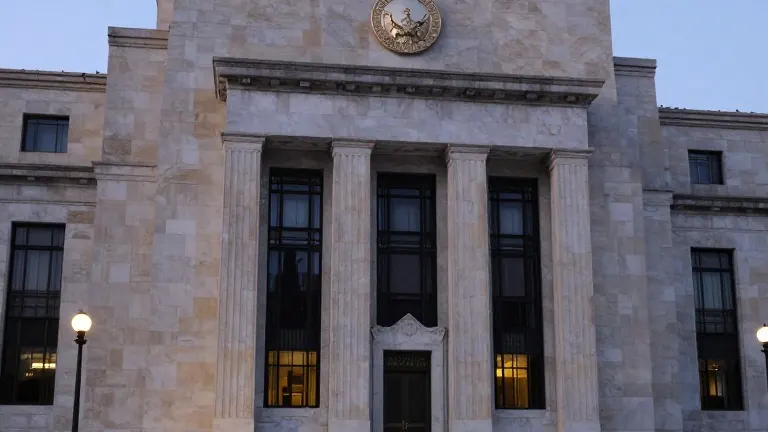
The Federal Open Market Committee voted Wednesday to hold the benchmark interest rate steady in a range of 3.75% to 4.0%. This marks the second consecutive meeting where the central bank has chosen not to change its policy stance. The decision keeps the cost of borrowing for banks unchanged from the level set in September.
Two members of the twelve-person committee broke from the majority view. Governor Lisa Cook and Cleveland Federal Reserve President Beth Hammack voted to raise the rate by 25 basis points. Cook is facing a renewed effort by the White House to remove her from her position, a process that moved to a hearing scheduled for early November. This is her first dissenting vote since joining the board in 2022.
The committee’s statement acknowledged that inflation remains elevated. It stated that gathering more information will help determine the appropriate policy stance to return prices to the 2% goal. The text described economic activity as expanding at a strong pace, upgrading the description from solid used in September. The statement removed language explaining the previous rate increase.
President Donald Trump nominated Fed Chair Kevin Warsh to his current role. Trump has frequently argued that rates should be lower. Warsh announced changes to the meeting schedule for next year. He proposed reducing the number of regular policy meetings. One meeting in 2027 will focus solely on broad monetary policy strategy without a rate vote.
Markets had priced in a less than 10% chance of a rate hike before the announcement. The S&P 500 maintained its gains following the decision. Futures data suggests a high probability of another increase at the December meeting. Additional hikes are also priced for 2027.
Inflation data presents a complex picture for policymakers. The core personal consumption expenditures price index is expected to exceed 3% for September. Economists note that price pressures have expanded beyond the energy sector and the impact of the Iran conflict. The unemployment rate remains low, and the Atlanta Fed’s GDPNow tracker points to 3.4% annualized growth for the third quarter.
Strong consumer spending and investment in artificial intelligence continue to drive economic activity. This strength has fueled debate over whether current rates are restrictive enough. Fed Vice Chair Philip Jefferson and New York Fed President John Williams recently stated that current conditions allow time to evaluate the next move. Dallas President Lorie Logan and Minneapolis President Neel Kashkari, who dissented in July, joined the majority Wednesday.
Andrew Davis, head of investment strategy at Bryn Mawr Trust, commented on the decision. He noted that the economy is slowing but not breaking. He stated that holding rates steady allows policymakers more time to assess the response to September’s hike and recent rises in longer-term borrowing costs.
More Business · Customer Complaints · Report a business · Got a Story?