Trump's $5,000 Dividend Promise Vanishes as Democrats Sweep Congress
The president's conditional payout to every adult citizen is now unlikely to materialize after voters rejected the party he tied the check to.
By Samir Patterson ·

President Donald Trump’s pledge to send $5,000 to every American adult has effectively dissolved following Tuesday’s elections. The promise, known as the Trump Dividend, was explicitly conditioned on Republicans retaining control of both the House of Representatives and the Senate. With Democrats now holding majorities in both chambers, the specific trigger for the payment has failed, leaving the proposal in legal and political limbo.
Trump made the announcement at the Republican Midterm Convention in Dallas last week. He told the crowd, "If the Republicans win, you win with us and you get $5,000." He described the payout as a direct result of the nation’s economic success and compared it to corporate dividends. The president stated that the money would come from tariff revenues, a source that fiscal experts had already questioned could cover the full cost of the initiative.
The proposal faced immediate scrutiny from within his own party. House Speaker Mike Johnson, who has since announced he will not seek reelection as House Republican leader, stated that the payment requires congressional approval. Johnson said, "I would assume, yes, he'd need Congress to act, and that's a creative idea." This comment contradicted Trump’s earlier remarks to CBS News Texas, where the president suggested Congress might not need to authorize the spending, though he did not specify how he would bypass legislative power for a sum exceeding $1 trillion.
Bipartisan criticism highlighted the fiscal strain such a payment would place on the federal budget. The cost is estimated at approximately $1.2 trillion, a figure that would significantly widen the country’s nearly $1.8 trillion annual budget deficit. Kenneth Rogoff, a former chief economist at the International Monetary Fund, warned that the spending would increase the odds of a debt crisis. Texas Republican Congressman Chip Roy criticized the plan on social media, writing that dependency is evil and soul-sucking in all its forms.
PolitiFact analyzed the proposal and found that while the payment is legally protected as a campaign promise, the logistics are daunting. The fact-checkers noted that the administration had announced no formal plan for distribution. Furthermore, the One Big Beautiful Bill Act, signed into law in 2025, did not include a separate tariff dividend for this purpose. Senator Bernie Moreno of Ohio pledged to introduce legislation to fund the proposal, but analysts noted that such a bill would likely struggle to reach the 60-vote supermajority needed in the Senate to overcome a filibuster.
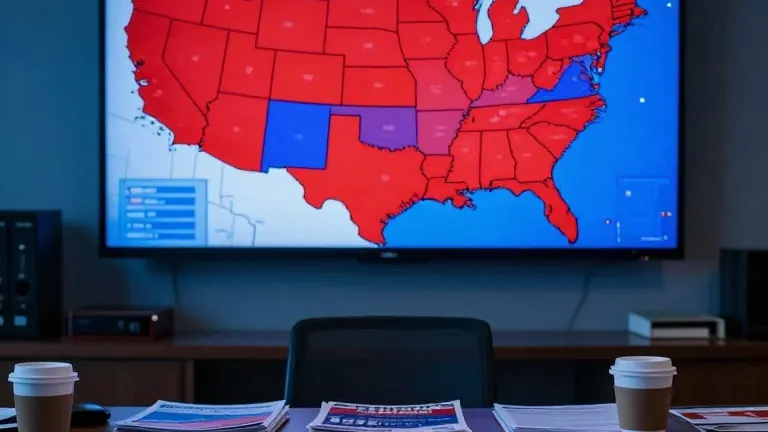
The election results have shifted the balance of power dramatically. Democrats have won 233 seats in the House, gaining 30 seats from their previous total, while Republicans hold 138. In the Senate, Democrats have won 20 of the 35 races held, flipping seven seats from the Republican column. This decisive victory was driven by voter dissatisfaction with the cost of living, high gas prices, and the administration's handling of the war with Iran.
The AP Voter Poll indicated that roughly two-thirds of voters believed Trump did not have the right priorities during the campaign. This sentiment contributed to the party's loss in key battleground states, including Ohio, Iowa, and North Carolina. In these states, majorities of voters said the Republican Senate candidates were too supportive of the unpopular president. The defeat marks the first time since 2006 that the opposition party has gained control of both chambers of Congress in a midterm election.
Speaker Johnson’s departure from the leadership role adds another layer of uncertainty to the Republican minority’s strategy. While he previously committed to working through the dividend with the president, the new Democratic leadership, headed by House Democratic Leader Hakeem Jeffries, has promised a robust oversight agenda. Jeffries said the new Congress would work to deliver on the dramatic change voters demanded, focusing on lowering costs for gas, groceries, and healthcare.
The White House has not yet issued a formal statement on the fate of the dividend. However, Trump’s post-election remarks have focused on the construction of the new White House ballroom rather than the legislative agenda. He told reporters that he would work with the new Democratic Congress but warned that he would use his veto power to strike down their agenda if necessary. The president’s focus on infrastructure projects and his continued insistence that he would have won the election if he were on the ballot suggest he may seek to deflect blame for the party’s performance.
The financial implications of the unfulfilled promise remain significant for the national debt. The Tax Foundation estimated that the new tariffs are projected to generate revenue that would be consumed almost entirely by the dividend over a decade. With the administration now facing a Democratic Congress, the path to funding such a large-scale transfer payment is unclear. Lawmakers will soon turn their attention to the 100-day agenda proposed by House Democrats, which includes bills to reverse cuts to the Affordable Care Act and Medicaid.
The episode highlights the tension between campaign rhetoric and fiscal reality in a divided government. While the $5,000 check may never reach voters' bank accounts, the promise served as a central talking point in the final weeks of the campaign. For many voters, particularly those concerned about inflation and the cost of living, the unfulfilled pledge became a symbol of the gap between the administration’s messaging and the economic conditions they face at home.