Hollywood's Conspiracy Films Mirror Modern Distrust of Government
NPR editors explain how decades of cinematic thrillers reflect the public's deepening skepticism of political institutions.
By Samir Patterson ·
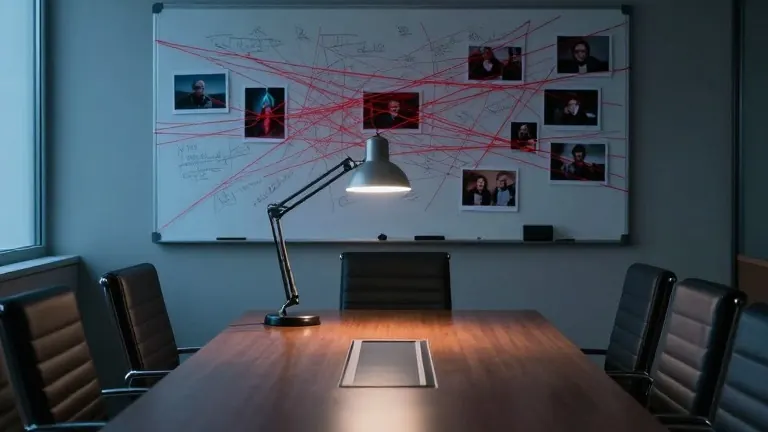
Hollywood has spent decades turning political uncertainty into entertainment, a trend that mirrors the current climate of public distrust in government. As conspiracy theories spread rapidly through social media feeds, films from the past offer a framework for understanding why audiences remain fixated on hidden powers and secret plots. Two editors from NPR, Barrie Hardymon and Danny Hensel, discussed how these stories continue to resonate with viewers in a polarized political season.
The appeal of these movies stems from a long-standing suspicion that political institutions are not acting in the public interest. Hardymon noted that viewers have always imagined something operating behind the scenes, making the visualization of their worst fears compelling. Hensel added that these narratives function like whodunits, except the culprit is not a single person but an entire system being slowly unraveled by a protagonist. This structure allows audiences to process complex political failures through the lens of a mystery.
Films based on real events serve as the foundation for this genre. Hardymon identified "All The President's Men" as the core text, noting that it depicts reporters fighting against a gross institutional machinery on behalf of the people. The 1979 film features a famous exchange where a source advises the journalists to "follow the money." Hensel pointed to "JFK" as another key example, where characters describe the assassination as a mystery wrapped in a riddle inside an enigma. These stories ground abstract fears in specific historical moments.
Fictional films expand on the legacy of these real events by imagining new scenarios. Hensel cited "The Parallax View" by Alan J. Pakula, which depicts a man uncovering a presidential assassination plot. He also highlighted "The Manchurian Candidate," a story about a soldier trained to assassinate a political figure. The original 1962 film starred Frank Sinatra and Laurence Harvey, while the 2004 remake featured Meryl Streep and Denzel Washington. Both versions illustrate how the fear of manipulated power persists across generations.
Older thrillers like "Three Days of the Condor" and "The Best Man" explore the mechanics of political survival. In "Three Days of the Condor," a CIA analyst returns to his office to find his colleagues dead, forcing him to navigate a world where information is a weapon. Hardymon observed that these films track the deterioration of public trust, moving from simple rumors to deep questions about the difference between the performance of democracy and its actual outcomes.
Modern audiences face a unique challenge where the line between fact and fiction blurs. Hensel argued that it is difficult to separate the fantasy of conspiracy from the reality that these theories now exist in the daily world. He pointed to "Burn After Reading" as an example of a silly conspiracy that still carries weight, illustrating how idiocy and intelligence can collide with national security implications.
Hensel suggested that "Winter Kills" best captures the current moment of information overload. The late 1970s film follows a man investigating his half-brother's assassination, only to find that the rabbit holes he explores reveal more about the characters providing information than the facts themselves. This aligns with the modern experience where the source and method of information reveal as much as the content.
The editors agreed that while Hollywood may not produce anything crazier than current social media feeds, the genre remains relevant. The shift from traditional cinema to digital feeds has changed how conspiracies are consumed, but the underlying anxiety about who controls the truth remains constant. The history of these films shows that the desire to decode political power is a persistent feature of public life.
More Culture · Hollywood news · Report a business · Got a Story?