Goldknopf and Bennett may decide Israel's next government
Political assessments suggest a three-seat Haredi party and a former prime minister could swing the balance of power in the upcoming election.
By Charlotte Dubois ·
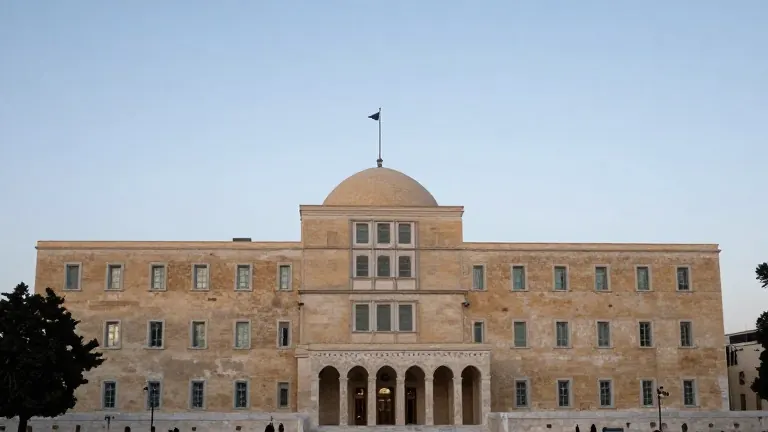
Israel faces a tight election race where the outcome may hinge on two unlikely figures: Yitzhak Goldknopf, leader of the small Haredi party Agudat Yisrael, and former prime minister Naftali Bennett. Political insiders suggest these two could hold the keys to forming a stable government as voting begins within 24 hours.
Agudat Yisrael holds only three seats in the Knesset. Despite its small size, assessments indicate the party could support an opposition-led government in exchange for budgetary deals. Such a move would not eliminate the need for votes from Arab parties, but it would alter the coalition math. In August, Maariv reported that Agudat Yisrael was exploring cooperation with Gadi Eisenkot, a figure from the opposition bloc.
These discussions emerged from friction inside United Torah Judaism, the coalition partner of the current government. Tensions exist between Agudat Yisrael and the Degel Hatorah faction over the Haredi military draft and relations with Prime Minister Benjamin Netanyahu. Rabbi Dov Lando recently wrote a letter expressing doubts about maintaining commitments to the Netanyahu bloc, adding uncertainty to the Haredi-Likud alliance.
Goldknopf faces a difficult path if he backs the opposition. His voters are largely aligned with the Right. Analysts warn that any move toward the change bloc could push his supporters toward Likud or Otzma Yehudit, threatening his party's future viability.
Attention also turns to Naftali Bennett, who could determine the shape of the next government if neither the current bloc nor the opposition reaches the 61 seats required for a majority. One scenario involves Bennett joining a Netanyahu-led government. This is considered a remote possibility because Bennett's current party base complicates such a shift. However, some view him as the only leader in the opposition capable of taking such a step due to his background on the Right.
Avigdor Liberman has also been mentioned as a potential swing vote, given his history of serving as defense minister in a Netanyahu government. Current assessments, however, suggest Liberman is unlikely to make that move again due to personal and political disagreements with the prime minister. These scenarios remain political assessments rather than formal agreements.
The ability of individual politicians to shift their bases will be a central issue in coalition negotiations. As the election approaches, the focus remains on whether Goldknopf or Bennett will make moves that could break the deadlock.
More Politics · World news · Report a business · Got a Story?