Equinix bets on smaller data centers to dodge U.S. building rules
The company's facilities typically stay under 100 megawatts, a threshold many proposed regulations target.
By Samir Patterson ·
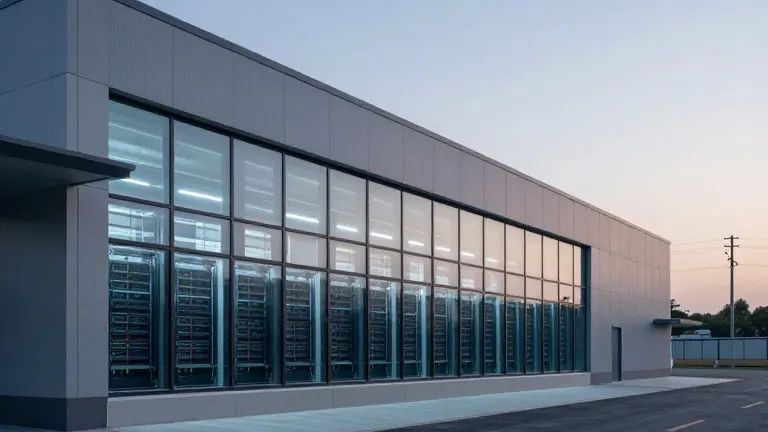
Regulators in the United States are currently reviewing the pace of artificial intelligence infrastructure growth. Equinix says its smaller facility footprint may help it avoid new construction limits. The company typically operates sites with capacities between 30 and 60 megawatts. This size falls below the roughly 100-megawatt level that many U.S. proposals target, according to Cyrus Adaggra, Equinix's Asia-Pacific president.
Adaggra spoke to CNBC's Squawk Box Asia about the company's strategy. He stated that Equinix directs investment toward markets with strong customer demand. Because its buildings are smaller, they often fall outside legislation aimed at larger developments. These remarks follow recent U.S. midterm election results. Those results have increased concerns about project delays and higher construction costs from new restrictions.
A report from BMI, part of Fitch Solutions, found that 53% of projected growth in the U.S. hyperscaler pipeline is in states with newly elected governors who may restrict construction. BMI noted that the effects of these potential rules will likely become clearer starting in 2028. Most projects scheduled for 2027 already have commitments in place.
Despite this uncertainty, Equinix has increased its capital spending to $7 billion. This figure is up from about $2 billion a few years earlier, Adaggra said. He cited stronger customer demand as the driver. The company's annualized gross bookings surpassed $500 million for the first time in the third quarter. That represents a 35% increase compared with the same period last year.
Adaggra attributed this growth to large enterprise clients, including Fortune 500 businesses, investing in hybrid and multi-cloud infrastructure. Equinix serves roughly 60% of Fortune 500 companies. Russell Investments warned that limits on data center development could raise costs across the AI supply chain. Slower U.S. construction could also weaken demand for semiconductors and equipment, affecting Asian suppliers.
Asia is emerging as a major destination for data center investment. Sjoerd Leenart, CEO of JPMorgan's banking business in Asia Pacific, said the region is expected to attract the most investment after the United States. Global hyperscalers are seeking Asian locations with sufficient land, electricity, and grid capacity. A report from Mirae Asset Securities identified South Korea as a key potential location for additional capacity. Operators with secured resources and long-term contracts are better positioned to expand there.
The region faces development challenges. A report from WTW identified electricity availability, grid connections, and equipment delays as key obstacles. Authorities in Thailand and Australia have paused some projects while assessing how data center energy use affects other industries and consumers.
More Business · National news · Customer Complaints · Report a business · Got a Story?