1.8 million: The housing gap Ghana must close
Ghana faces a shortage of nearly two million homes, with new financial tools aiming to lower mortgage rates to 8.4 percent.
By Samir Patterson ·
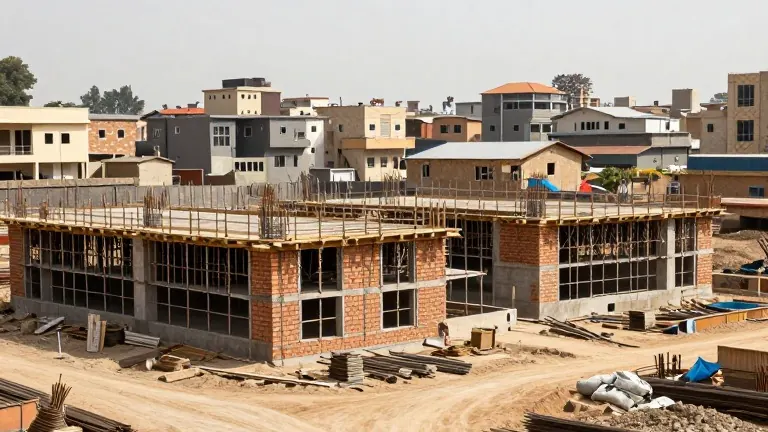
Ghana requires 1.8 million additional housing units to meet current demand.
The deficit has grown as urbanization outpaces construction capacity. Fifty-six point seven percent of the national population now resides in urban centers, yet only five percent can afford homes without state assistance. This disparity defines the current market, limiting the reach of private developers and conventional lenders.
Efforts to address this shortage intensified during the Africa Real Estate Conference and Expo held in Accra this week. Participants included developers, policymakers, and investors who discussed expanding construction and improving finance. The central question remained how to keep projects commercially viable without excluding the most vulnerable buyers.
Government intervention has focused on reducing borrowing costs. The National Homeownership Fund cut mortgage rates from 13.5 percent to 8.4 percent. A revolving fund of three billion cedis, approximately $256 million, targets public sector workers with repayment terms of 15 to 20 years. Authorities also plan to revive the Saglemi Housing Project, aiming for the first 700 units by March 2027. A 200-acre Green City Project is slated for Dedesua.
President John Dramani Mahama announced a one billion cedis allocation for the National Housing Fund in the 2027 budget. He noted that informal sector workers often lack payslips, which prevents them from accessing standard mortgages. "A system that cannot recognise these livelihoods excludes a substantial part of our nation from the opportunity to own a home," Mahama said.
Developers face high operational costs that inflate final prices. Borrowing costs have dropped to between 9 and 15 percent, but land acquisition remains difficult due to tenure issues. Samuel Amegayibor of the Ghana Real Estate Developers Association stated that about 70 percent of housing inputs are imported. "Apart from sand, gravel and water, most of the things are import-based," Amegayibor said. These expenses, combined with the need to build roads and utilities before construction starts, raise the cost of delivery.
Tenants also struggle with upfront costs. Although the Rent Act limits advance rent to six months, landlords often demand one to two years. New enforcement measures carry penalties of up to 3,000 cedis or six months in prison. The government is also testing the FirstKey app to verify listings and a program where the National Housing Fund pays rent advances directly to landlords.
Technology offers additional solutions. Thirty PropTech startups presented tools at the conference to reduce operating costs. Isaac Ayitey Chris-Quaye of NeuraHomes said smart systems can lower energy bills by 20 percent annually. William Atitso Amankwah of AWA Roofing Sheets estimates his Cool Roof coating saves households between 330 and 810 cedis per year. These innovations aim to make ownership more sustainable for low and middle-income earners who make up 70 percent of the population.
More Business · Customer Complaints · Report a business · Got a Story?