Federal Regulators Standardize Cyan Lighting for Autonomous Fleets
New NHTSA proposals aim to streamline market entry for driverless vehicles by defining a universal visual signal and removing obsolete hardware requirements.
By Jayden Sweiler ·
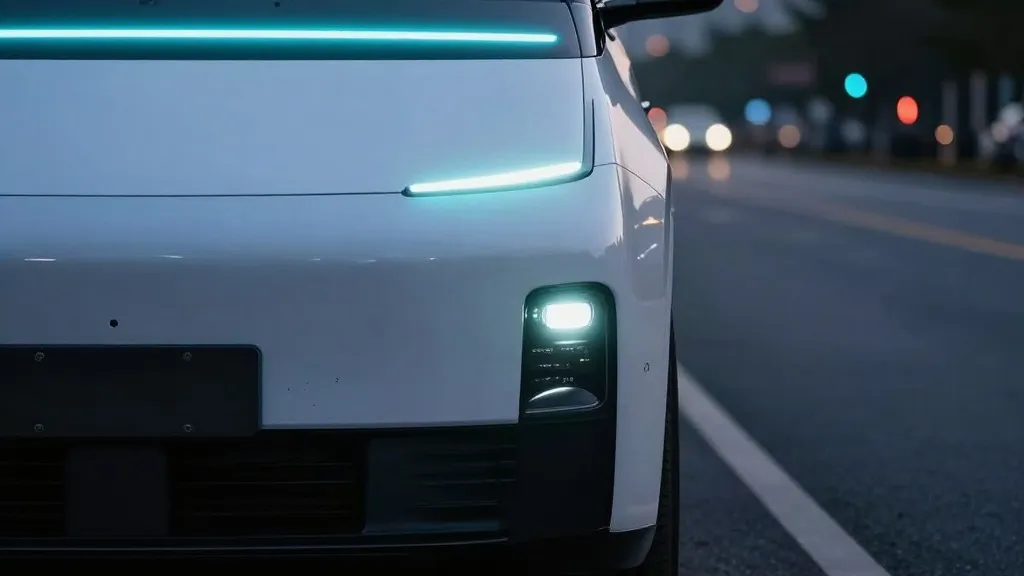
The National Highway Traffic Safety Administration has proposed a standardized cyan color for marker lights on autonomous vehicles, seeking to establish a clear visual language for driverless cars on public roads. This regulatory move represents a definitive shift away from years of industry debate over various signaling methods, such as flashing text or audio alerts, in favor of a single, consistent federal standard. The agency aims to clarify how these vehicles communicate their operational status to law enforcement and other road users.
The proposal involves rewriting Federal Motor Vehicle Safety Standard No. 108 to accommodate the specific needs of autonomous driving systems. By selecting a blue-green hue, regulators intend to fill a visual gap in the current traffic lighting palette, which already reserves red, amber, white, and flashing blue or red for brakes, turn signals, and emergency vehicles. This approach ensures that the new signal does not conflict with existing conventions, reducing the potential for confusion among human drivers and pedestrians.
While the cyan marker lights are optional for manufacturers, the rule sets strict guidelines regarding their brightness, location, and color. This standardization allows major players in the sector, including robotaxi operators like Waymo, Nuro, and Zoox, as well as automakers such as GM and Mercedes, to adopt a uniform setup. There is some precedent for this visual cue, as Mercedes-Benz previously received state-level approval for turquoise lights on its Level 3 Drive Pilot vehicles, although the company later shifted its strategy toward a Level 2++ system.
Beyond adding new lighting requirements, NHTSA proposes removing several legacy mandates that are impractical for vehicles without human drivers. Current rules require physical hazard switches, manual beam shifters, and interior turn levers. The agency plans to eliminate these requirements to streamline the design process. Additionally, the proposal updates the 12.8-volt testing standard to better accommodate modern LED architectures and considers removing restrictions on the placement of high-beam and low-beam lights.
This initiative is part of a broader effort by the Department of Transportation to accelerate the deployment of autonomous vehicles. The goal is to reduce administrative barriers for automakers designing cars without traditional controls like steering wheels and pedals. However, the regulatory environment remains complex, as agencies continue to enforce existing standards strictly. For instance, NHTSA recently opened an audit query into the Tesla Cybercab to examine the technical data used for its certification, specifically regarding the absence of sideview mirrors, pedals, and a steering wheel.
The proposed changes signal a growing recognition that the regulatory framework for automobiles needs to evolve alongside the technology. By standardizing the visual identification of driverless vehicles and simplifying hardware requirements, the federal government aims to create a more predictable market environment. This could lower compliance costs for manufacturers and provide greater clarity for the general public as autonomous fleets expand across the country.
Source: The Verge