Bomb threats force 18 European flights to land or divert
No explosives were found during searches, though the disruption follows similar incidents earlier this week that affected 35 flights.
By Samir Patterson ·
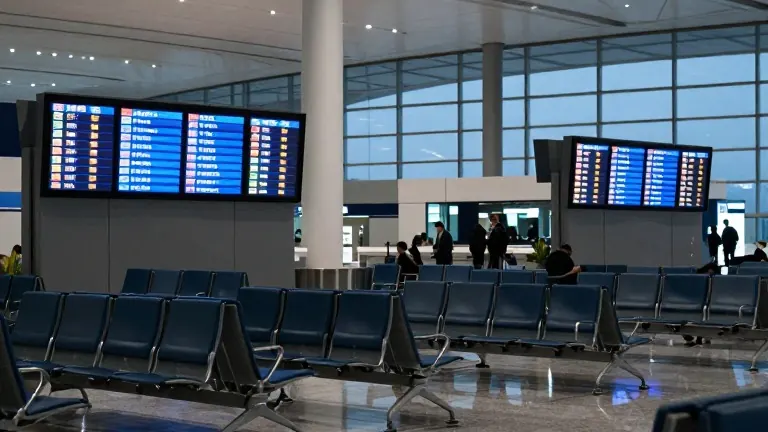
Travelers in Europe faced delays and diversions on Friday after at least 18 flights received bomb threats. The disruptions touched airports in Bulgaria, Czechia, France, Italy, Hungary, Cyprus, Romania, the United Kingdom, and Portugal. All affected aircraft landed safely, and ground crews found no explosive devices during their inspections.
The alerts forced nine flights to or from Prague to change course. Four flights over France were also affected, as were two planes heading to Sofia and one flight traveling from Lisbon to Rome. Danish police investigated a threat against Copenhagen airport, but the facility continued normal operations. In Hungary, defense minister Romulusz Ruszin-Szendi stated on Facebook that fighter jets scrambled three times to escort civilian aircraft through the country's airspace.
These incidents follow a similar wave of threats on Tuesday and Thursday that caused at least 35 flights to be diverted or searched. While the latest batch of disruptions affected only 0.0674% of the 26,709 flights scheduled for Europe on Friday according to Eurocontrol, the cumulative effect has raised questions about coordination. The repeated use of the same method has led officials to wonder if the disruptions are part of a larger effort to inconvenience travelers.
A separate series of threats targeted media organizations in Ireland on Friday. The attacks disrupted broadcasts and forced staff to evacuate offices and newsrooms. Taoiseach Micheál Martin told RTÉ Radio 1 that the threats aimed to sow fear and anxiety. He noted that it is relatively simple to disrupt normal society in this way. Martin added that European security agencies would work to identify those responsible and hold them accountable.
British broadcaster Sky reported that it also received a security threat on Friday and alerted the relevant authorities. Earlier in the week, cyberattacks targeted supermarket refrigeration systems in at least seven European countries. Investigators have found no evidence that a hostile terror group or state actor, such as Russia or Iran, is behind the airline hoaxes. However, some threats from Thursday were signed “fighters of the Male State,” a reference to a Russian far-right movement founded in 2016.
Some officials suspect the disruptions are linked to European support for Ukraine in its war against the Russian invasion. Spain’s foreign minister, José Manuel Albares, told the national broadcaster TVE that authorities need more time to identify culprits. He observed a clear pattern in the incidents, stating that it is not a coincidence that so many events share the same modus operandi. Albares described the situation as an attempt at hybrid aggression and psychological warfare, adding that Europe must be prepared for more such challenges.