New Orleans blacksmith forges ironwork using 18th-century blueprints
Darryl Reeves restores historic structures like the Cabildo fence while training the next generation of metalworkers in his shop.
By Charlotte Dubois ·
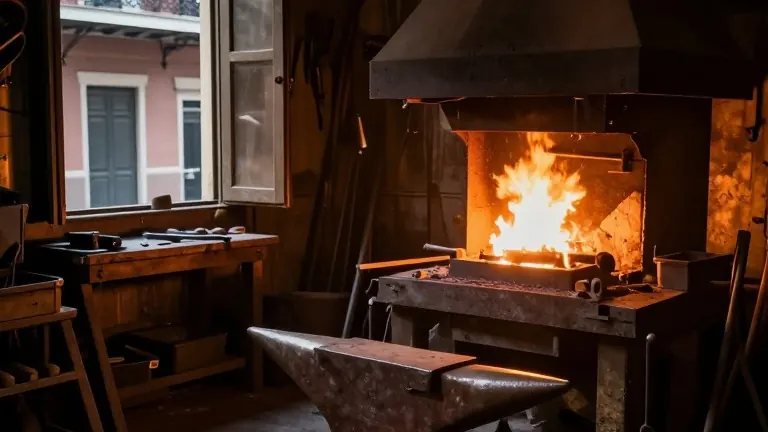
Darryl Reeves works at Andrew’s Welding and Blacksmith Shop in New Orleans, shaping raw iron into functional pieces and decorative elements. As one of the few remaining practitioners in the city, he maintains a trade that has defined the local architecture for centuries.
Reeves has worked on projects that require strict historical accuracy. He recently restored the iron fence in front of the Cabildo using plans that date back to the 1790s. The process involves studying original documents to replicate the work of the artisans who built the structures over two centuries ago.
The blacksmith’s connection to the craft is generational. His grandfather was a blacksmith, and Reeves recalls visiting the shop as a child. He described watching workers strike metal and creating sparks, an experience that shaped his career choice. "We used to just pass through and just watch these guys beat on this metal with the sparks and all," Reeves said.
He creates a variety of items, including iron hinges, hand-forged leaves, and the tools he uses to do the work. Reeves views the physical labor as a way to process frustration and find satisfaction. "That’s what gives me joy," he said. "How many people get to beat on metal, especially if you’re frustrated with something and get it out?"
A younger worker is learning the trade at his shop. Karina Roca moved from Boston to New Orleans to study under Reeves. She first saw a PBS program about Reeves more than 10 years ago and decided to pursue the craft. Roca is currently working toward a master’s degree in historic preservation at Tulane University.
Roca has been at the blacksmith shop for five years. She notes that the ironwork reflects the diverse cultural influences of the city, including Spanish, West African, and French traditions. "It works in so many ways to kind of keep this aesthetic of New Orleans alive," Roca said. "It’s sort of this symbol, this beacon of a space where all of these cultures have come together for centuries now."
Reeves sees the work as a direct link to the past. He described the restoration process as a conversation with the original fabricators. The shop continues to produce hand-forged pieces that maintain the visual identity of the city’s historic districts.